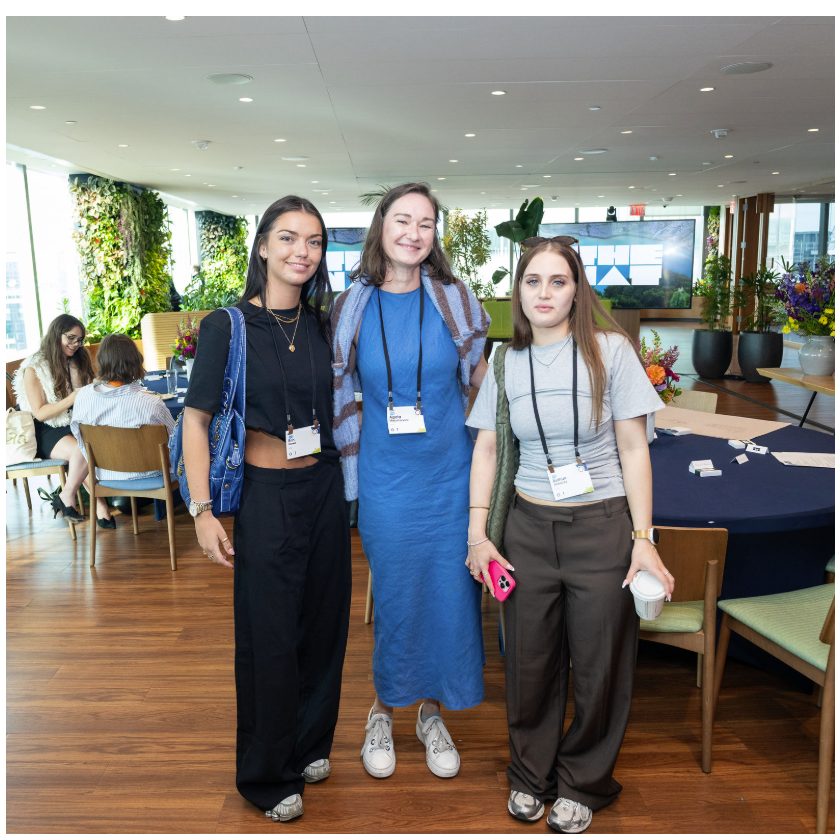






After attending New York Climate Week 2025, LCCA student Erin Howe shares her reflections on joining The NAT and exploring how fashion, business and culture can work together for a more sustainable future.
There’s no doubt that the future of fashion must align with and adapt to ongoing research on sustainability. Taking part in The NAT workshops and hearing industry experts share what we can do really opened my eyes to how reluctant the fashion industry still is to change and adapt.

From education to finance, there are many resources that support a more sustainable and ethical world. So why does so much ignorance still exist? During New York Climate Week, we attended a roundtable exploring ideas for a “Nature-Positive” fashion industry. We discussed areas such as consumer engagement, strategic priorities, collective action, and supply chain inclusion and disclosure. Hearing perspectives from students to CEOs helped us understand how individual actions can add up to create much greater change.
Focusing heavily on strategic priorities and collective action at this event, we all agreed that education plays a vital role in building a Nature-Positive fashion future. It’s not only about teaching emerging designers and creatives, but also about helping consumers understand what to buy, where to buy, and how to care for their garments in a more ethical way. In a world where over-consumerism has become so normalised, we need to remind ourselves that it’s not normal to own excessive amounts of clothes just to follow trends. Instead, circular fashion must become the new norm for a safer, more sustainable future.

My key takeaway from the roundtable was that, to truly make the fashion industry sustainable, its perspective must change. The industry has dangerously turned “sustainability” into a marketing term, using it as a selling point that often leads to the opposite, unethical effect. We couldn’t reach a clear conclusion on how to encourage more responsible behaviour – it’s been highlighted to us so many times what will happen if we don’t change – so the question remains: what will be the driving force that gets everyone, from designers to consumers, to adapt?
On Day 2, we attended a panel on how technology can be used to help create a more sustainable world. There’s a lot of fear surrounding technology – AI in particular – so it was exciting to hear how it can be used positively, and how new start-ups are developing technology alongside sustainability. It was eye-opening to see how brands today are creating real solutions to the challenges we face.
Technology is a key resource in today’s world, but there’s a fine line between using and abusing it. The NAT panel highlighted businesses that have managed to keep sustainability at their core while benefiting from technology. The event also emphasised the need for more education around technology, so we don’t repeat past mistakes or take it for granted, as we’ve done with other resources.
Overall, The NAT gave us the chance to learn and deepen our understanding of how we can preserve the natural world. After my time in New York, I plan to keep up to date with The NAT and to share its insights with my peers and fellow students, cross-pollinating ideas to help spread awareness.