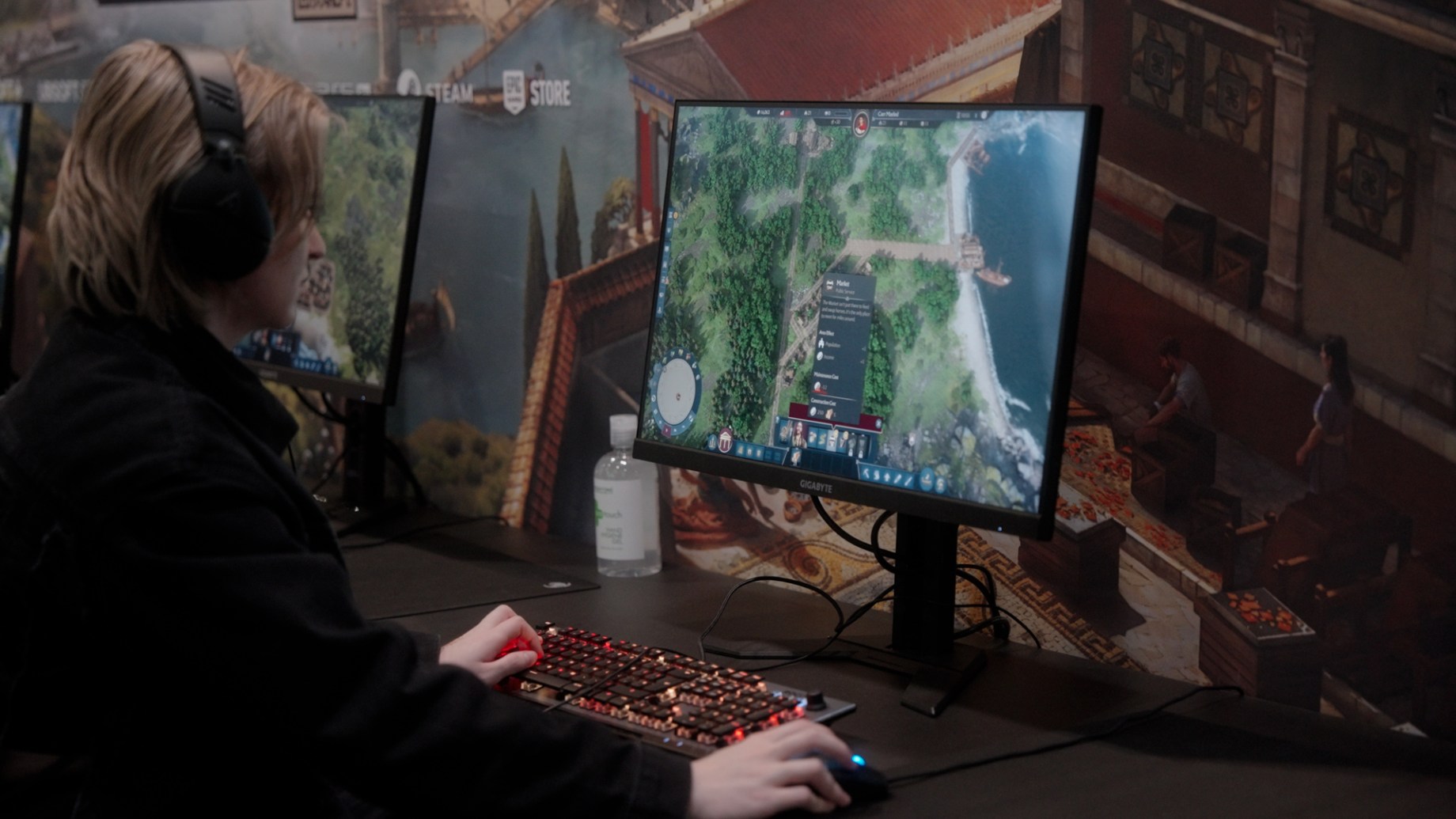






If you’re looking ahead to a career in game design, it helps to understand how quickly the field is shifting. Studios and indie teams are trying out new tech, exploring different storytelling styles, and giving players more freedom in how they play.
To give you a clearer picture of what’s coming, here are seven trends shaping game design careers in 2026 and beyond.
AI-Assisted Design Is Becoming a Standard Tool
AI isn’t taking over game design, but it is becoming part of the everyday toolkit. Studios are already using tools like Unity Muse, Ghostwriter, GitHub Copilot, and OpenAI’s generative APIs to handle routine tasks such as quick art passes, filler dialogue, code checks, and early level layouts.
What does that mean for designers? More time to focus on the creative work that makes a hit game. The big advantage in 2026 won’t be “letting AI do the work,” but becoming an expert in how to guide these tools while keeping creative direction on track.
Procedural Worlds Are Getting Smarter
Procedural generation has been around for a long time, but it’s evolving fast. At its core, it uses algorithms to create content instead of having designers place every detail by hand. Games like No Man’s Sky, Minecraft, and Diablo have used it for years to build environments, but the next wave goes beyond randomised assets.
Studios are now using procedural systems to create spaces that react in real time to players, shift over time, and feel different with every run. For designers, this means focusing less on hand-crafted assets and more on defining the rules for systems to shape the world. It calls for strong systems thinking, an understanding of player behaviour, and the ability to make algorithm-driven content feel intentional and organic.
Players Are Becoming Co-Creators
A growing number of future designers are getting their start by modding games, building custom levels, or creating assets in platforms like Minecraft and Roblox. Now, generative AI is taking that idea even further, giving players the ability to create quests, characters, and even entire locations with simple prompts.
Tools such as AI Dungeon and Scenario.gg highlight how much player input is set to shape future game worlds and narratives. For designers, this shift creates new roles built around modular content, flexible systems, and player-driven storytelling.
Social Sandbox Worlds Are Becoming New Digital Hangouts
In recent years, games have quickly evolved into social spaces where players spend time together outside of quests and missions. Fortnite now hosts concerts and live events, while Roblox is a massive digital theme park filled with player-created worlds.
Because of this shift, studios are hiring roles centred on social interaction, live events, and community-based design. If you’re interested in how players communicate, collaborate, and build groups, this part of the industry is full of opportunities.
XR, AR and VR Have Finally Reached a Usable Stage
Immersive tech has been capped as the future of gaming for a while now, but devices like Apple Vision Pro, Meta Quest 3 and PSVR2 have made it practical and accessible. These headsets support more stable performance, better tracking and longer play sessions.
This unlocks new opportunities, particularly in spatial storytelling and mixed-reality interactions. For game designers, understanding how players through space will become increasingly important as hybrid experiences catch up with traditional screen-based gameplay.
Cross-Platform Games Are Becoming the Norm
By 2026, players expect games to work on whatever device they use. Games like Fortnite, Rocket League, Genshin Impact, and Honkai: Star Rail have set expectations for seamless cross-platform play, shared progression, and cloud saves.
Players want high production value, steady updates, and strong social features without being tied to specific hardware. For designers, that means thinking in terms of broader ecosystems rather than focusing on a single platform.
Cozy and Wellbeing-Focused Games Keep Growing
Cozy games have shifted from a small niche to a major force in the industry. Titles like Stardew Valley, Animal Crossing, Unpacking, and PowerWash Simulator show that more players are turning to games as a way to unwind with experiences that are relaxing rather than competitive.
This trend opens the door for new design styles built around calm pacing and wholesome creativity. It’s also a reminder that game design careers aren’t limited to fast-paced or challenge-heavy genres and the audience for games centred on comfort continues to grow.
Game Design Career Pathways to Watch
Looking at these trends, it’s clear that the future of game design in 2026 isn’t defined by one or two new roles. Instead, it’s a growing network of specializations that work together to shape where games are heading.
Studios are already focusing on roles such as:
- UX and accessibility designers
- Narrative and systems designers
- Technical artists
- AI behaviour designers
- Spatial and immersion designers
- Live-ops and community economy specialists
There are more paths than ever for aspiring designers, and each one benefits from a mix of creativity, technical understanding, and a strong sense of what players want.
Thinking About Studying Game Design?
If you’re curious about where these trends could take you, LCCA’s BA (Hons) Game Design course offers expert teaching and hands-on, studio-focused projects. You’ll work with the same tools shaping the industry today, including Unreal Engine 5, UEFN, and Jira.